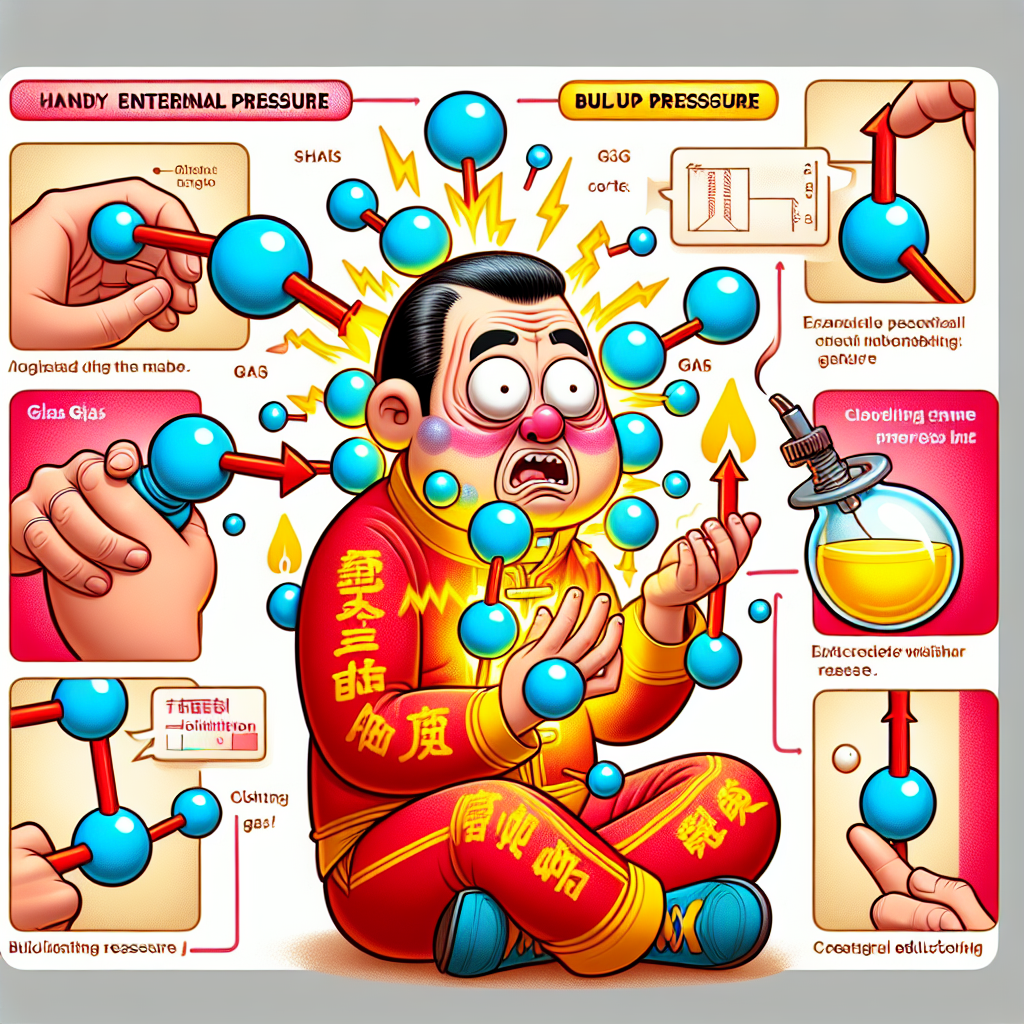

You're in a meeting. A date. An elevator. And your intestines start brewing up a storm. You clench. You hold. You pray. And when you finally release that pent-up prisoner in the safety of solitude, it's apocalyptic. The smell is worse. The pressure is intense. The satisfaction is… complicated.
Why does holding in a fart make it so much worse when it finally escapes? Let's dive into the science of pressurized gas and why your body is terrible at keeping secrets.
The Pressure Cooker Effect
When you hold in a fart, you're essentially turning your colon into a high-pressure chamber. Here's what happens:
- Gas compression: The gas that wants to escape gets compressed and concentrated as you hold it in
- Increased concentration: Volatile sulfur compounds (the stinky stuff) become more concentrated in the compressed gas
- Temperature rise: Compressed gas heats up slightly, which can intensify odor molecules
- Additional fermentation: While you're holding it, your gut bacteria keep working, producing even more gas
The Release Velocity Problem
When you finally let go, that compressed gas doesn't just trickle out—it explodes. The higher the pressure, the faster the release velocity. This means:
- More gas molecules hit the air at once
- Better dispersion of odor compounds
- Wider smell radius (sorry, everyone nearby)
- That satisfying (but embarrassing) sound
It's basic physics: pressure differential creates force. The longer you hold it, the bigger the pressure difference, the more dramatic the release.
The Absorption Factor
Here's where it gets weird: when you hold in a fart long enough, some of that gas gets reabsorbed into your bloodstream through your intestinal walls. This isn't dangerous, but:
- The most volatile (smelliest) compounds stay in the gas pocket
- Less smelly components get absorbed first
- What remains is concentrated stink essence
- You basically create a distilled fart
Think of it like reducing a sauce—you're concentrating the flavor (except in this case, the “flavor” is hydrogen sulfide and skatole).
The Gut Bacteria Conspiracy
Your intestinal bacteria don't stop working just because you're clenching. In fact:
- They keep fermenting fiber and producing gas
- The longer you hold it, the more time they have to work
- Multiple “batches” of gas accumulate and mix
- You're essentially creating a composite fart—a greatest hits album
What might have been three medium-intensity farts released separately becomes one mega-fart with triple the payload.
The Science of Smell Perception
There's also a psychological component. When you've been holding a fart:
- Anticipation anxiety: Your brain is already hyper-aware of the smell risk
- Surprise factor: The sudden strong odor catches you off guard
- Guilt amplification: You know you did this to yourself (and others)
- Confined space effect: You're probably in a bathroom or small room, concentrating the smell
Health Considerations (Yes, Really)
Holding farts occasionally is fine, but chronic fart-holding can cause:
- Bloating and discomfort
- Intestinal distension (your colon stretching)
- Reduced gut motility (things slow down)
- Diverticulitis risk (in extreme cases)
- That weird “fart anxiety” where you're always worried about it
Bottom line: Your body wants to fart. Fighting it just makes things worse.
Practical Tips for Fart Management
Since we can't always let ‘er rip, here are some strategies:
- The Strategic Exit: Excuse yourself before the pressure builds
- The Crop Dust: Release while walking (not recommended, but effective)
- The Cover Noise: Cough, drop something, or time it with environmental sounds
- The Prevention: Watch your diet before important events (avoid beans, dairy, Brussels sprouts)
- The Acceptance: Own it. Everyone farts. It's biology.
The FartRanker Data
According to our Fart Calculator, users who report “holding it in” frequently score significantly higher in smell intensity ratings. The correlation is real:
- Average held fart: 7.8/10 smell intensity
- Average released-on-schedule fart: 5.2/10 smell intensity
- Held farts are 50% more likely to be classified as SBDs (Silent But Deadlies)
Final Thoughts
Holding in a fart is like shaking a soda bottle—the longer you wait, the more explosive the release. The pressure builds, the gas concentrates, the bacteria keep working, and what could have been a manageable toot becomes a weapons-grade cloud.
The science is clear: let it out when you can, or face the consequences. Your colon is not a storage facility. It's a one-way highway with an express lane.
Want to track your fart patterns and see how holding affects your emissions? Try the FartRanker Calculator and contribute to our growing database of flatulence science!
Got a story about a fart you held too long? Share it in the comments. We all need a good laugh (and a reminder that we're not alone).