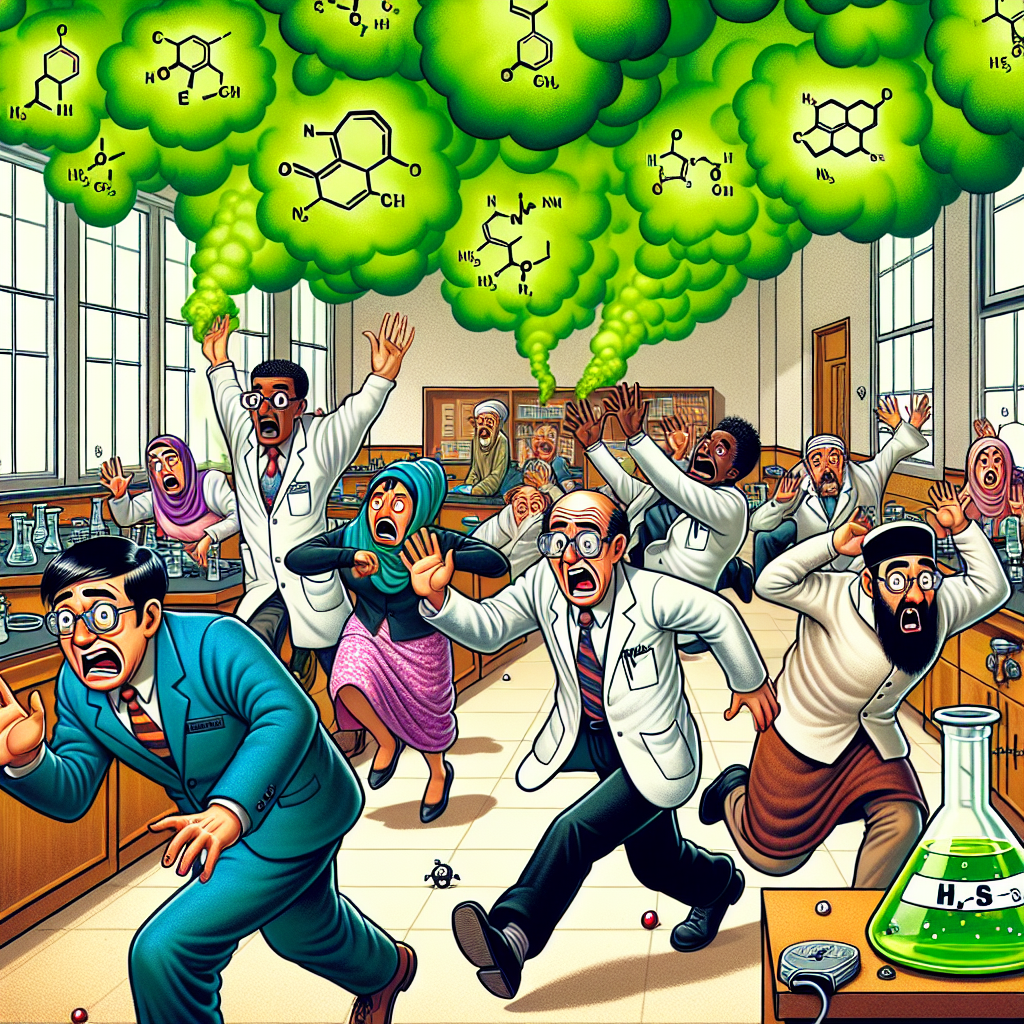

Ever released one so powerful people literally evacuated? Here’s the science behind room-clearing farts—and why some are weapons-grade while others are harmless.
The Instant Exodus
We’ve all witnessed it. Someone lets one rip. Within seconds, people are gagging, fleeing, opening windows, and questioning their life choices. Meanwhile, the perpetrator sits there innocently, pretending nothing happened.
But what makes some farts so devastatingly potent that they can clear a room faster than a fire alarm? The answer lies in chemistry, biology, and the perfect storm of digestive circumstances.
The Chemistry of Deadly Farts
Room-clearing farts are chemical warfare, and your gut is the weapons factory. The most offensive farts contain high concentrations of these sulfur compounds:
1. Hydrogen Sulfide (H₂S)
This is the heavy artillery—the compound responsible for that classic “rotten egg” smell. When gut bacteria break down sulfur-containing proteins (especially from meat, eggs, and cruciferous vegetables), they produce hydrogen sulfide. Even at concentrations as low as 0.5 parts per billion, humans can detect it. At higher levels? Instant nose assault.
2. Methanethiol (CH₃SH)
If hydrogen sulfide is a sledgehammer, methanethiol is a precision strike. It smells like rotting cabbage mixed with sewage and has an even lower detection threshold than hydrogen sulfide. It’s what makes cruciferous vegetables like broccoli, cauliflower, and Brussels sprouts produce such legendary gas.
3. Dimethyl Sulfide ((CH₃)₂S)
This compound adds a sweet, almost fruity note to the horror—like someone tried to make potpourri out of garbage. It’s produced when certain gut bacteria metabolize sulfur compounds, and it lingers.
4. Skatole and Indole
These nitrogen-containing compounds smell exactly like what they sound like: feces. They’re produced when bacteria break down the amino acid tryptophan. In small amounts, they’re unpleasant. In large amounts? Biological terrorism.
Why YOUR Farts Are Especially Deadly
Not all digestive systems are created equal. Here’s why some people consistently produce room-clearers:
Diet Matters (A Lot)
High-sulfur foods create high-sulfur gas. The worst offenders:
- Red meat – Packed with sulfur-containing amino acids
- Eggs – Literal sulfur bombs
- Cruciferous vegetables – Broccoli, cauliflower, cabbage, Brussels sprouts
- Garlic and onions – Sulfur compounds galore
- Beans – Oligosaccharides that feed gas-producing bacteria
- Dairy (if lactose intolerant) – Undigested lactose = bacterial feast = deadly gas
Your Gut Microbiome Is Unique
Everyone’s gut bacteria are different. Some people harbor more sulfur-reducing bacteria (like Desulfovibrio species), which specialize in producing hydrogen sulfide. If you’ve got a thriving colony of these little gas factories, your farts are going to be legendary—and not in a good way.
Digestion Speed
The slower your digestion, the more time bacteria have to ferment your food and produce volatile sulfur compounds. Constipation? Your farts are going to be apocalyptic. That’s why the first fart after a long period without passing gas is often a biological weapon—maximum fermentation time.
Food Intolerances
Lactose intolerance, gluten sensitivity, and other digestive issues mean undigested food sits in your gut longer, giving bacteria more time to produce sulfur compounds. It’s basically a slow-cook process for maximum gas potency.
The Physics of Dispersal
A room-clearing fart isn’t just about smell intensity—it’s about distribution. Here’s why some farts spread like wildfire:
Silent But Deadly (SBD) Wins Every Time
Loud farts are 90% air, 10% stink. Silent farts are nearly 100% concentrated gas. They come out slowly, allowing sulfur compounds to disperse gradually and evenly throughout a room. By the time anyone realizes what’s happening, it’s too late—the entire space is contaminated.
Temperature and Air Flow
Warm farts (body temperature: 98.6°F / 37°C) rise and spread faster than you’d think. In a room with good air circulation, your toxic cloud can reach every corner within 30 seconds. In a small, enclosed space with no airflow (elevator, car, meeting room)? Complete saturation in under 10 seconds.
Humidity Makes It Worse
Ever notice farts smell worse in humid environments (like bathrooms after a shower)? Water molecules help carry volatile compounds through the air. The more humid the air, the better those sulfur molecules disperse—and the stronger the smell.
The Worst Scenarios for Room-Clearing Gas
Some situations are perfect storms for maximum destruction:
Post-Buffet Farts
You ate a little of everything—red meat, cruciferous vegetables, dairy, beans. Your gut is a chemistry lab gone rogue. The result? A polyglot of sulfur compounds that create a smell so complex, so layered, that people can’t even identify what they’re smelling—they just know it’s terrible.
The Morning After Heavy Drinking
Alcohol disrupts gut bacteria, slows digestion, and causes inflammation. Add in greasy late-night food, and your morning farts are guaranteed to be unholy. This is why “beer farts” are legendary.
Post-Workout Protein Farts
Whey protein and other supplements are sulfur-rich. Your body breaks them down into hydrogen sulfide and methanethiol. Gym bros know: protein shakes = nuclear gas.
Long Flights or Car Rides
Sitting for hours slows digestion, and cabin pressure changes (on planes) cause gas to expand. When you finally let go, it’s a pressurized release of maximum-fermented horror.
Can You Reduce the Devastation?
If you’re tired of being “that person” who clears rooms, here’s how to dial it back:
- Cut back on sulfur-rich foods – Less meat, eggs, and cruciferous vegetables = less sulfur gas
- Eat slower – Less air swallowed = less gas overall
- Probiotics – Balance your gut bacteria to reduce sulfur-producing species
- Stay hydrated – Helps digestion move faster, less fermentation time
- Exercise regularly – Speeds up digestion, reduces gas buildup
- Identify food intolerances – If dairy, gluten, or FODMAPs wreck you, avoid them
Or, you know, just embrace it. Own your power. Assert dominance.
The Science Says: It’s Not Just You
Everyone produces sulfur-containing gas. But some people—through diet, gut bacteria, and digestive quirks—are natural gas weapons. If you’re one of them, know this: it’s not your fault, it’s chemistry.
Now, whether you choose to weaponize that knowledge or work to mitigate it? That’s up to you.
Track Your Gas Like a Pro
Want to see how your diet affects your flatulence potency? Use the FartRanker Fart Calculator to log your emissions, track patterns, and see which foods produce your deadliest farts. Because science is beautiful, even when it stinks.
Have you ever cleared a room with a single fart? Share your horror story in the comments. We want the details.