
We’ve all been there. Someone rips one and the room evacuates. Another person lets loose and it’s barely noticeable. What gives? Is it diet? Luck? Or are some people just genetically cursed with weapons-grade gas?
Spoiler alert: It’s all of the above, but genetics plays a bigger role than you think.
Your Gut Microbiome: The Fart Factory
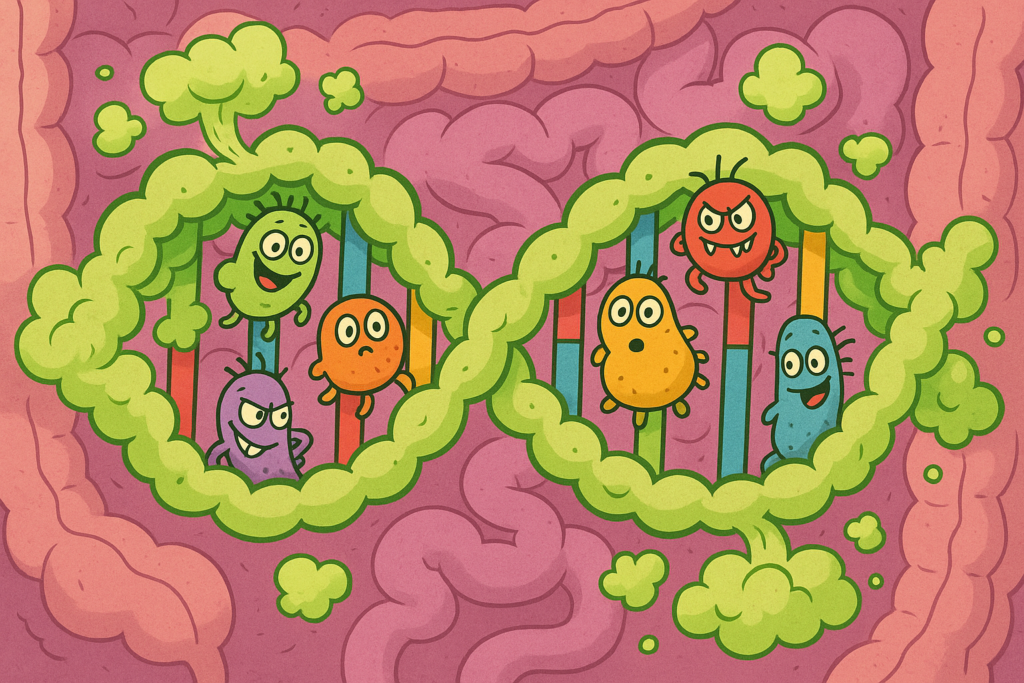
Inside your intestines lives a thriving ecosystem of bacteria—trillions of them. These little guys are responsible for breaking down food your body can’t digest on its own, and in the process, they produce gas. Lots of it.
Here’s the kicker: your specific blend of gut bacteria is as unique as your fingerprint, influenced heavily by your genes. Some people are blessed with bacterial strains that produce less sulfur compounds (the stinky stuff). Others? Not so much.
The Sulfur Connection
The truly eye-watering farts contain hydrogen sulfide—that rotten egg smell. Your genes determine:
- How much sulfur your bacteria produce when breaking down proteins
- How efficiently your gut processes sulfur-rich foods (eggs, meat, cruciferous veggies)
- Your enzyme production levels that could help neutralize the smell before it escapes
Some lucky souls have genes that code for enzymes that break down these sulfur compounds more efficiently. The rest of us? We’re walking biological warfare.
Lactose Intolerance & Other Genetic Gifts
Ever notice how some people can demolish a pizza without consequence while others turn into a ticking time bomb? Thank genetics for that too.
Lactose intolerance is genetic—around 65% of the human population has reduced ability to digest lactose after infancy. When undigested lactose hits your colon, bacteria feast on it and produce gas. A LOT of gas. And it doesn’t smell great.
Other genetic conditions affecting fart smell include:
- IBS (Irritable Bowel Syndrome) – Genetic predisposition affects gut motility and gas production
- SIBO (Small Intestinal Bacterial Overgrowth) – Some people are genetically more susceptible
- Enzyme deficiencies – Lack of specific digestive enzymes can lead to increased bacterial fermentation
Diet Still Matters (But Your Genes Load the Gun)
Yes, eating beans, broccoli, and hard-boiled eggs will make anyone gassy. But how bad that gas smells depends on your genetic makeup. Two people can eat the exact same meal and produce vastly different results.
Your genes determine:
- Which bacteria colonize your gut
- How efficiently you digest certain foods
- How much sulfur ends up in your colon
- Your gut transit time (slower = more bacterial action = more smell)
The Family That Clears Rooms Together
Ever notice that deadly gas seems to run in families? It’s not just that you all eat the same foods. You literally inherit your initial gut bacteria from your parents (thanks, Mom’s birth canal!), and your genes influence which bacteria stick around long-term.
So if your family gatherings could double as chemical warfare simulations, you can partially blame your ancestors.
Can You Change Your Genetic Fart Destiny?
You can’t change your DNA, but you CAN influence your gut bacteria through:
- Probiotics – Introduce friendlier bacterial strains
- Prebiotics – Feed the good bacteria you want to keep
- Diet modifications – Reduce sulfur-rich foods if you’re a heavy producer
- Hydration – Helps things move along before bacteria throw a party
But let’s be honest: if you’ve got the genes for nuclear-grade flatulence, you’re mostly managing damage control, not solving the problem.
The Bottom Line
Some people are genetically gifted with farts that smell like roses (okay, maybe not roses, but at least not Satan’s breath). Others draw the short straw and produce gas that could clear a football stadium.
If you’re in the latter category, take comfort: you’re not doing anything wrong. Your DNA just decided to make you a legend. Embrace it. Log it in the Fart Calculator. Own your stink.
After all, if you’re going to be cursed with deadly gas, you might as well get some leaderboard points for it.
Ready to rank your genetic gift? Head to the FartRanker Fart Calculator and see how your emissions stack up. Because if it’s going to smell that bad, it might as well count for something.