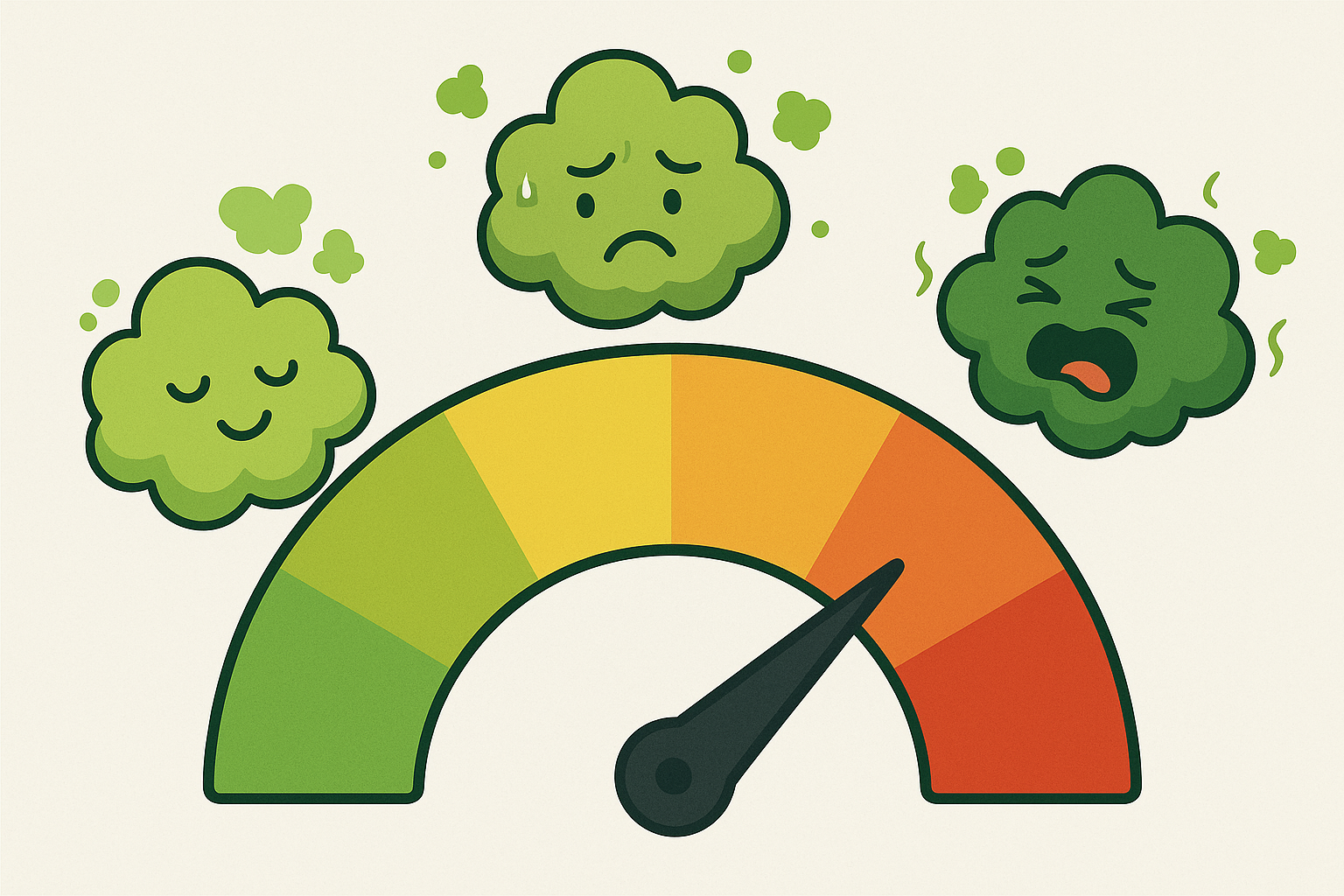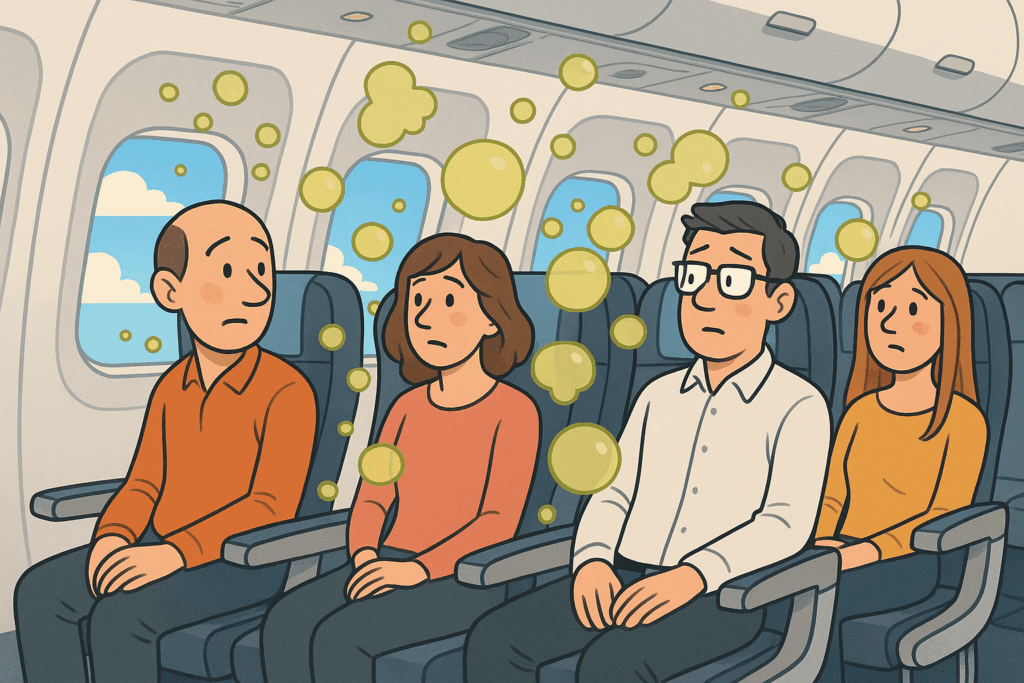

You’re cruising at 35,000 feet, enjoying your complimentary pretzels and that tiny can of ginger ale, when suddenly… you feel it. That unmistakable rumbling down below. You’re about to contribute to one of aviation’s least-discussed but most universal phenomena: airplane farts.
Don’t worry—you’re not alone. In fact, everyone on that flight is dealing with the same gaseous situation. Welcome to the science of high-altitude flatulence!
The Science: It’s Not You, It’s Physics
Here’s the thing: your increased need to pass gas at altitude isn’t a personal failing or a result of eating airport Taco Bell (though that doesn’t help). It’s pure physics, specifically a little principle called Boyle’s Law.
Boyle’s Law states that as pressure decreases, gas expands. While airplane cabins are pressurized, they’re not pressurized to sea level—they’re typically maintained at the equivalent of 6,000 to 8,000 feet elevation. That’s like suddenly teleporting to Denver, but in a sealed metal tube with 200 strangers.
The result? The gas already hanging out in your intestines can expand by up to 30%. That’s a lot of extra volume that needs to go somewhere, and physics only gives it two options: up or down. Since you probably don’t want to spend the flight burping like a bullfrog, your body often chooses the southern exit.
The Numbers Don’t Lie
Scientists have actually studied this. In 2013, a group of researchers published a paper in the New Zealand Medical Journal with the delightfully clinical title about flatulence at altitude. Their conclusion? On a typical flight, passengers may experience a significant increase in intestinal gas volume, leading to more frequent and more voluminous toots.
Danish gastroenterologist Jacob Rosenberg co-authored a study that estimated the average person produces about 10 farts per day normally. At altitude? That number can climb substantially higher. The study also noted that flight crews—who spend their careers at altitude—develop what can only be called “professional-grade gas management skills.”
The Perfect Storm: Why Airplane Farts Hit Different
It’s not just the pressure change. Several factors combine to create what we might call the Perfect Fart Storm:
- Sitting for hours: Long periods of sitting compresses your intestines and slows digestion, leading to more gas buildup.
- Dehydration: Airplane cabin air is drier than the Sahara (seriously, humidity levels can drop to 10-20%). Dehydration slows your digestive system.
- Stress: Travel anxiety can mess with your gut. Stress hormones affect digestion and can increase gas production.
- Airplane food: Many in-flight meals are designed to survive reheating, not your digestive tract. Plus, beans seem to appear in everything.
- Carbonated drinks: That ginger ale isn’t helping. Carbonation = more gas in your system.
To Hold or Not to Hold?
Here’s where it gets interesting. Researchers have actually debated the ethics of airplane flatulence. The Danish study mentioned above concluded that holding in farts can lead to bloating, discomfort, and pain. It can also cause the gas to be absorbed into your bloodstream and eventually exhaled through your breath. Yes, you read that right—hold a fart, breathe a fart.
“We recommend that passengers and flight crew release flatulence as needed to maintain personal comfort.”
That’s real medical advice, people. Though the researchers did acknowledge this creates a “social” problem for everyone else in the cabin.
Survival Strategies: The Mile-High Gas Protocol
Want to minimize your contribution to the aircraft’s aroma profile? Here are some evidence-based tips:
- Watch your pre-flight meals: Avoid beans, lentils, broccoli, cabbage, onions, and other notorious gas producers for 24 hours before your flight.
- Skip the carbonation: Stick to still water instead of soda or sparkling water.
- Take a walk: When the seatbelt sign is off, get up and move around. Walking helps move gas through your system more efficiently.
- Consider activated charcoal: Some studies suggest charcoal supplements can help absorb intestinal gas and reduce odor. Just check with your doctor first.
- Dress in layers: This might sound weird, but looser clothing means less abdominal pressure, which can help gas escape more… subtly.
- Choose your seat wisely: Aisle seats give you easier access to the lavatory for tactical releases.
The Silver Lining: Airplane Air Filtration
Here’s some good news: modern aircraft have remarkably effective air filtration systems. The cabin air is completely replaced every 2-3 minutes, and HEPA filters remove up to 99.9% of airborne particles. While they can’t eliminate fart smells instantly, they do mean your contribution to the atmosphere is quickly diluted and filtered.
Plus, the constant white noise from the engines provides excellent acoustic cover. If a fart happens on a 747 and no one hears it… did it really happen?
The Bottom Line
Next time you’re squirming in seat 23B, trying to discreetly manage your expanding gas situation, remember: you’re not weird, you’re not sick, and you’re definitely not alone. Every single person on that plane is fighting the same battle against Boyle’s Law.
The human body wasn’t designed for pressurized metal tubes hurtling through the stratosphere, and sometimes it lets you know in the most honest way possible. Embrace the science, be considerate of your neighbors, and maybe spring for that aisle seat.
Safe travels—and safe releases! 💨✈️